How to Spot a Substandard Screw Pile Before It Goes in the Ground
Last month, we were driving through a rural property near our service area when a stack of screw piles caught our eye. We pulled over. A local resident had bought them from an online seller for a small building project, couldn’t get them installed, and called us for help. What we found was worth sharing: the problem wasn’t the soil, the equipment, or the installer. It was the piles themselves.
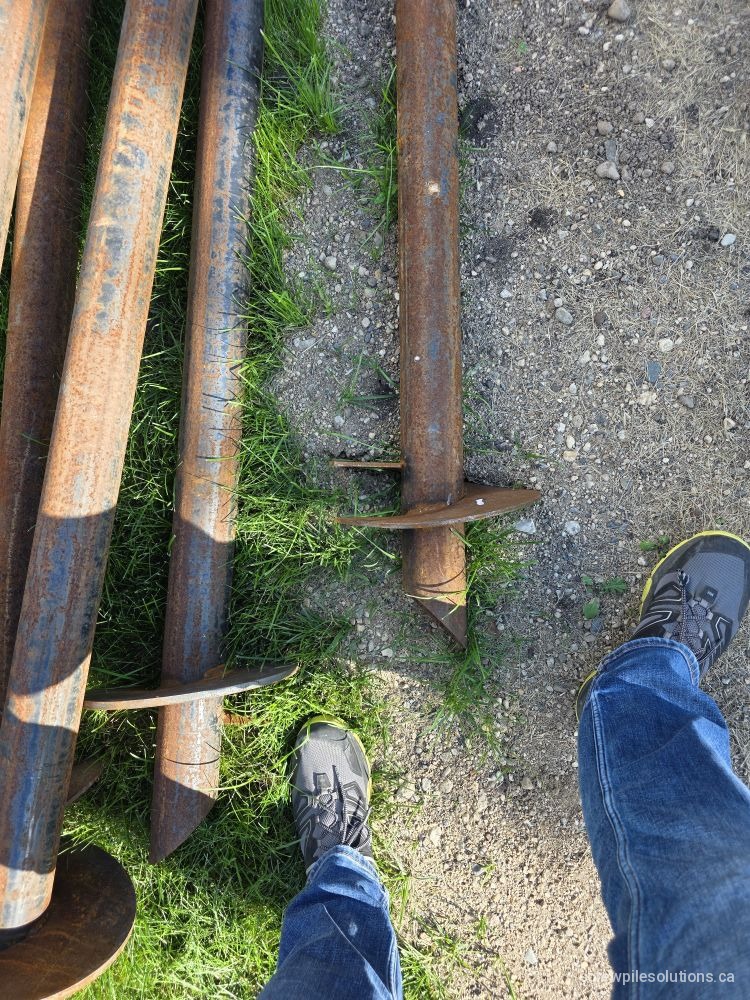
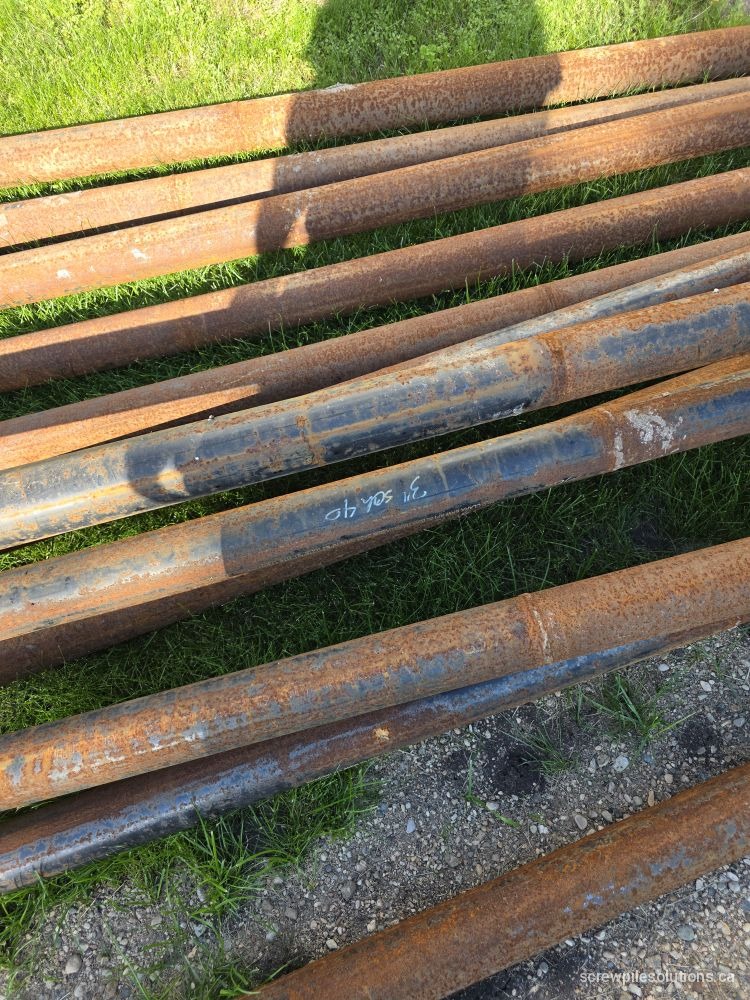
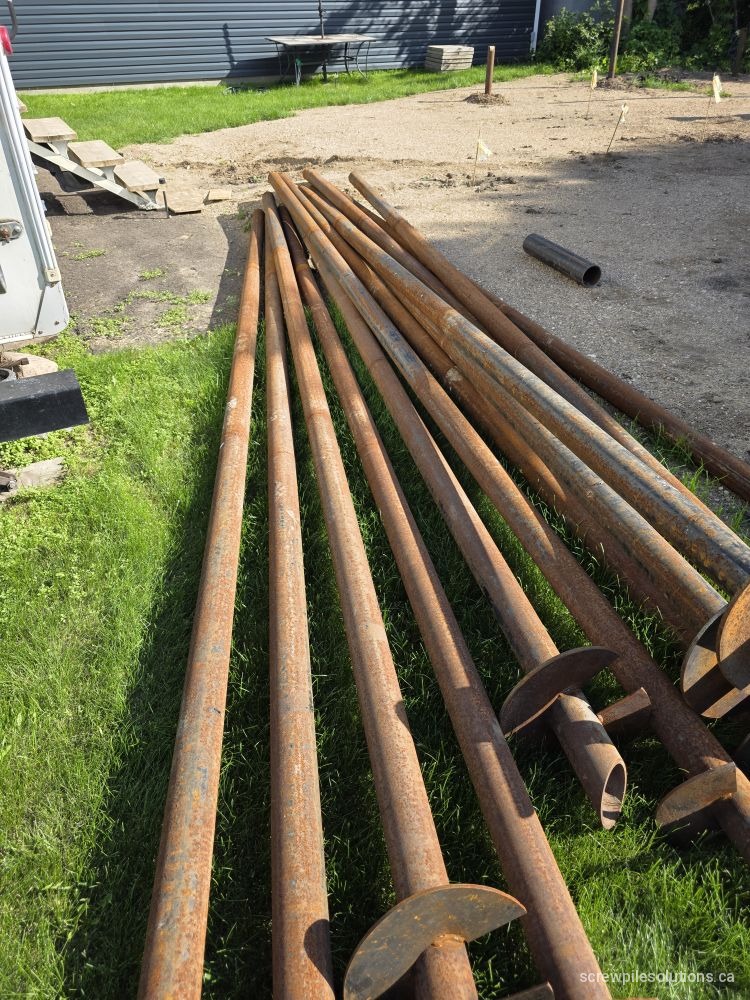
What We Saw That Was Wrong
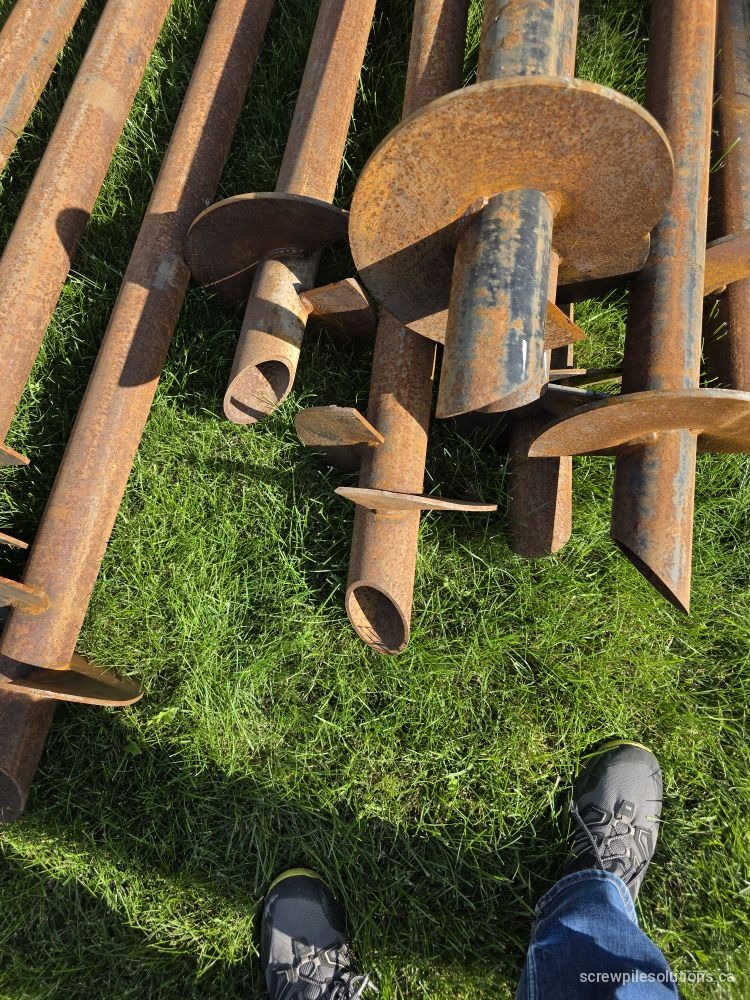
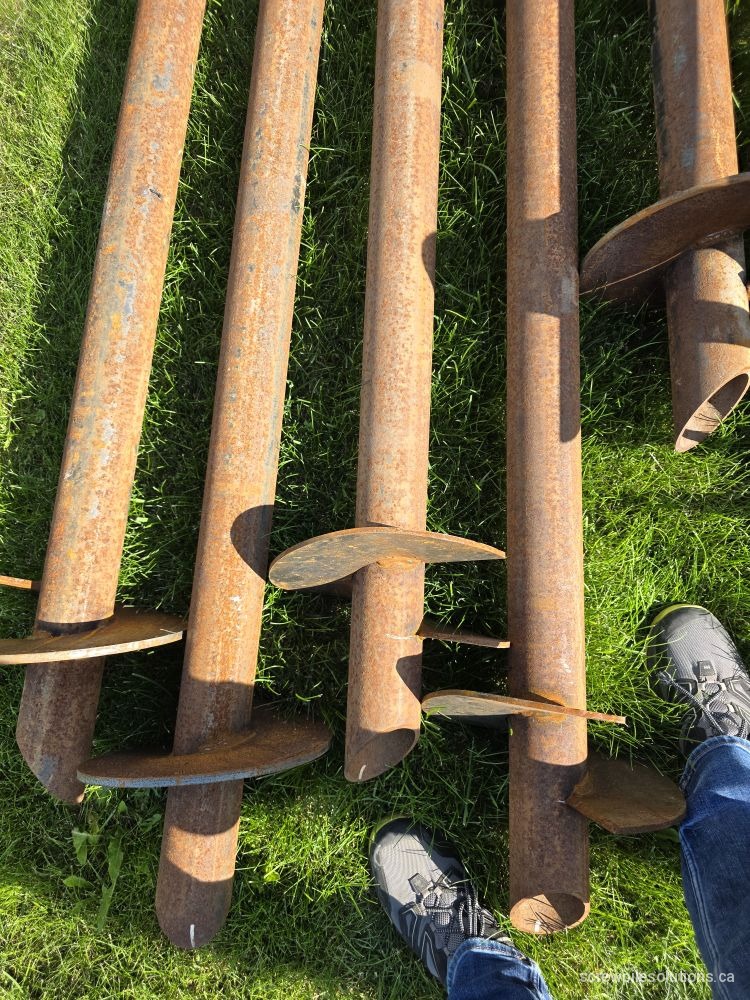
We’ve installed thousands of helical piles across Manitoba and Saskatchewan since 2010, so we know what a properly manufactured pile looks like. These piles missed the mark in several ways.
Inconsistent helix pitch. The spacing between the helix flights varied from one rotation to the next. A properly engineered helix maintains a consistent pitch so the pile advances predictably with each turn. Inconsistent pitch disturbs the soil instead of screwing cleanly into it, reducing the bearing capacity it’s supposed to deliver.
Poor weld quality. The welds attaching the helix plates to the shaft were rough, inconsistent, and in places undersized. A helical pile relies entirely on those welds to transfer load into the shaft and the structure above. A weak or porous weld is a failure point waiting to happen under installation torque.
Wrong steel entirely. This was the most concerning issue. The shafts weren’t structural HSS (hollow structural section) steel — they were Schedule 40 pipe, a product designed for plumbing, not the compressive and torsional loads a foundation pile must withstand. It isn’t rated to the structural steel standards certified pile systems require, and it behaves unpredictably under installation torque.
No uniformity between piles. Helix diameters varied within the same batch. Every pile needs to perform consistently so an engineer can predict load capacity across a foundation. When each pile is different, there’s no way to know what you’re getting until it’s in the ground, or already failed. On top of that, the piles showed heavy surface rust, well beyond the light mill scale expected on new steel, pointing to poor-quality base material and coating.
We’ve Seen This Before
This wasn’t an isolated case. We’ve received several calls this year from people across Manitoba and Saskatchewan who bought piles from online sellers or unfamiliar fabricators, tried to install them, and hit a wall. Some piles wouldn’t achieve proper depth or torque. Others were already partially installed before the problems became obvious, leaving the homeowner with a half-finished foundation.
As demand for helical foundations grows across the Prairies, more sellers and small fabricators are entering the market without the certification or quality control a proper system requires. These products often look reasonable in a listing photo. It’s only when you’re standing next to them, or trying to install them, that the shortcuts become obvious.
What Happens When Bad Piles Go in the Ground
Substandard piles tend to fail in one of two ways during installation: either they can’t achieve required torque and spin in place without biting into the soil, or they seat unevenly because the helix geometry can’t engage the ground properly. Either way, a pile that can’t achieve verified torque can’t be certified for the load it needs to carry.
Without certification, a building inspector has no basis to approve the foundation. The homeowner is left with piles that can’t be used, documented, or built on, the money spent is effectively gone, and the project is delayed while a proper solution is sourced.
Five Things to Check Before You Accept Any Pile
Whether buying piles directly or hiring a contractor, these five checks will tell you a lot before a single pile touches the ground.
- Ask for the CCMC certification number. A legitimate helical pile system has a CCMC evaluation number you can look up in the public registry. If a seller can’t produce one, that’s your answer.
- Check for consistent helix pitch. Lay a few piles side by side. The spacing and geometry of the helix flights should be identical from pile to pile.
- Confirm the steel is proper structural HSS, not Schedule 40 pipe. Ask what steel grade and standard the shaft is manufactured to; it should reference a structural steel standard, not a plumbing spec.
- Inspect weld quality. Welds should be clean, uniform, and free of visible porosity. Ask whether welding follows a recognized structural welding standard.
- Ask whether a documentation package is included. A reputable supplier or installer provides engineering documentation, a pile load report, and a layout drawing as standard practice, not an upsell.
What a Properly Certified Pile Looks Like
We install the Postech pile system, CCMC-certified under number 13102-R, and the contrast with what we found on the side of the road is significant. A certified pile shows uniform helix geometry, clean structural welds, proper HSS steel, and a coating that resists corrosion long-term rather than rusting within weeks. That’s not always visible in a listing photo, which is why certification and documentation exist.
If You’re Not Sure About the Piles You’ve Bought, Call Us
If you’ve already purchased piles and can’t get them installed, or something doesn’t feel right partway through a project, we’re happy to take a look. We’ve helped several homeowners in Manitoba and Saskatchewan sort out this exact situation, and the sooner it’s caught, the easier it is to fix. Every installation we complete includes a Pile Load Report and layout drawing, giving you documentation an inspector, engineer, or future buyer can rely on.
Screw Pile Solutions Ltd. has installed CCMC-certified helical piles from Austin, Manitoba and Yorkton, Saskatchewan since 2010. If you have questions about screw pile quality in Manitoba, want a second opinion on piles you’ve already bought, or need a foundation done right the first time, give us a call.
Austin, MB: 204.637.2621
Yorkton, SK: 877-574-5376